
 4 months ago
64
4 months ago
64
Glenroy Anthony Michael Archangelo Smith—is the story of a man who gave reggae a smooth, baritone heartbeat. His life was a journey from the quiet hills of St. Ann to the global stage, defined by a voice that could make a simple commercial sound like a national anthem.
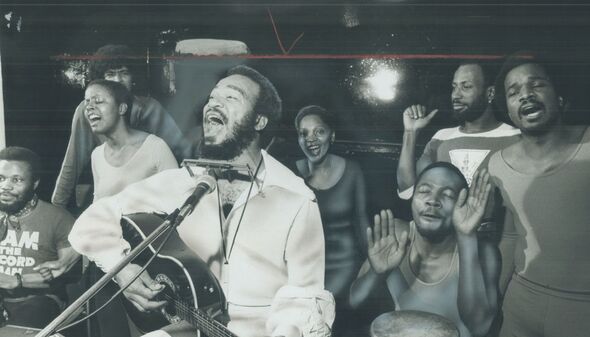
Born on May 1st 1945 in St. Ann, Jamaica, Ernie didn’t start out as a rebel or a Rasta icon. He grew up in a middle-class environment, influenced by the folk songs of the countryside and the soul music drifting over the radio from the United States.
In the late 1960s, while many of his peers were leaning into the aggressive rhythms of early dancehall or political roots reggae, Ernie headed to Federal Records. Under the guidance of producer Richard Khouri, he developed a signature “easy-listening” reggae style. His voice was deep, velvet-smooth, and distinctively “country”—a bridge between Jamaican folk and modern pop.
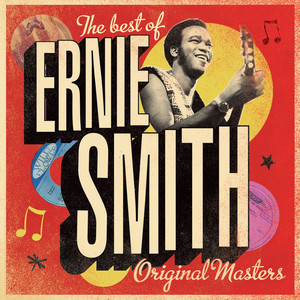
The 1970s marked Ernie’s ascent to superstardom. He became a hit machine, churning out tracks that remain staples of Caribbean life today:
- “Pitta Patta”: A playful, infectious track that captured the joy of the era.
- “Duppy Gunman”: A clever, humorous commentary on Jamaican folklore and urban life that cemented him as a master storyteller.
His greatest international breakthrough came in 1972. He wrote a song called “Life is Just for Living” for a Red Stripe beer commercial. It was so popular it was released as a single and won the Yamaha World Popular Music Festival in Tokyo. This was a historic moment—Ernie Smith was the first Jamaican musician to win an international award of that magnitude, paving the way for the global acceptance of reggae.
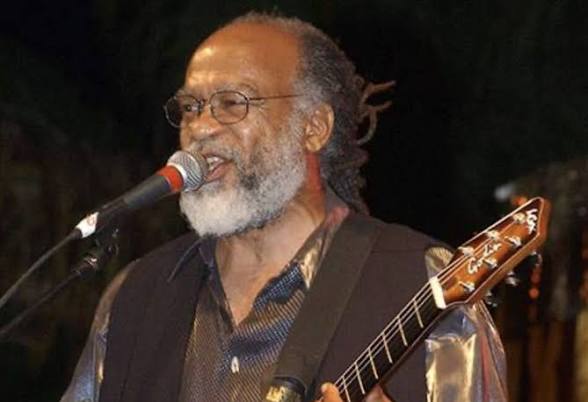
In 1973, the Jamaican government awarded him the Badge of Honour for Meritorious Service. However, the political climate of the 1970s was becoming increasingly volatile.
In 1976, Ernie released “The Power and the Glory.”Though he intended it as a spiritual song, the public and politicians interpreted it as a stinging critique of the government. After receiving threats to his life, Ernie made the difficult decision to leave his homeland. He moved to Toronto, Canada, and later to Florida. During this period, his music took on a more reflective, sometimes gospel-inspired tone, as he grappled with life in the diaspora.
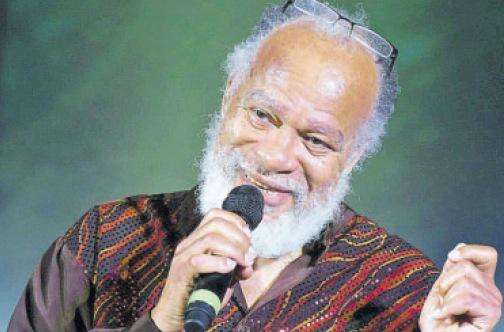
By the late 1990s, the political tensions had cooled, and Ernie returned to Jamaica. He was welcomed back as a living legend. He didn’t just rest on his laurels; he continued to perform with a vigor that defied his age, often seen at jazz festivals and intimate acoustic sets where his baritone remained as rich as ever.
He became a mentor to younger artists, teaching them the importance of songwriting and “clean” production. To Ernie, music wasn’t just about the beat; it was about the story and the melody.
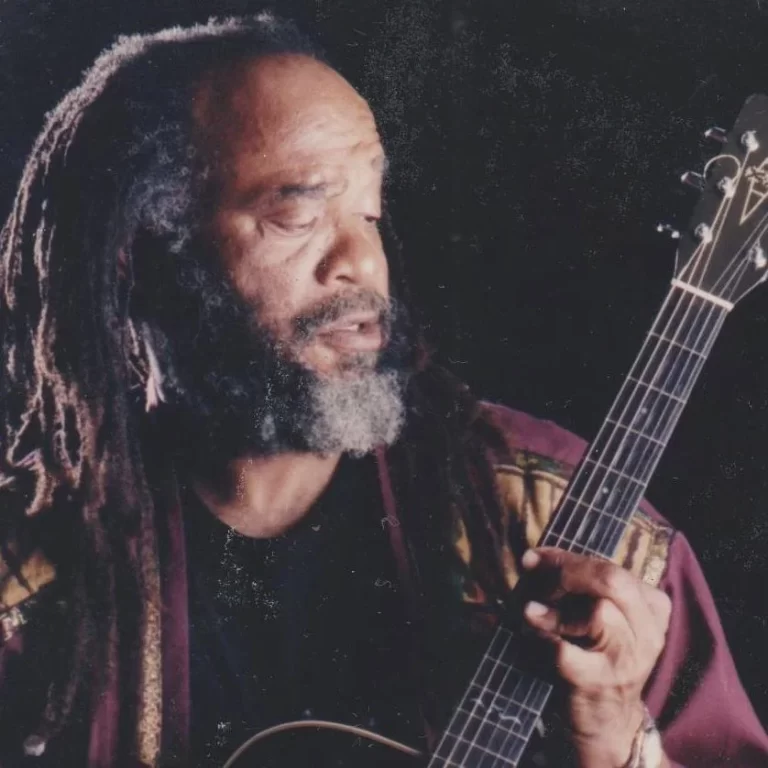
Ernie Smith’s final years were spent surrounded by his family and the music he loved. In early 2026, he underwent surgery for an intestinal issue. Despite a courageous fight, he suffered cardiac complications and passed away on April 16, 2026, at the University of Miami Hospital, at the age of 80.
His death was met with a national outpouring of grief in Jamaica. Prime Minister Andrew Holness described him as an “irreplaceable treasure” whose music was the soundtrack to the lives of generations. From the playful “Pitta Patta” to the soulful “Tears on My Pillow” (which he wrote for Johnny Nash), Ernie Smith’s legacy remains a testament to the power of a smooth voice and a gentle heart in a loud world.
 English (US) ·