
 4 months ago
44
4 months ago
44
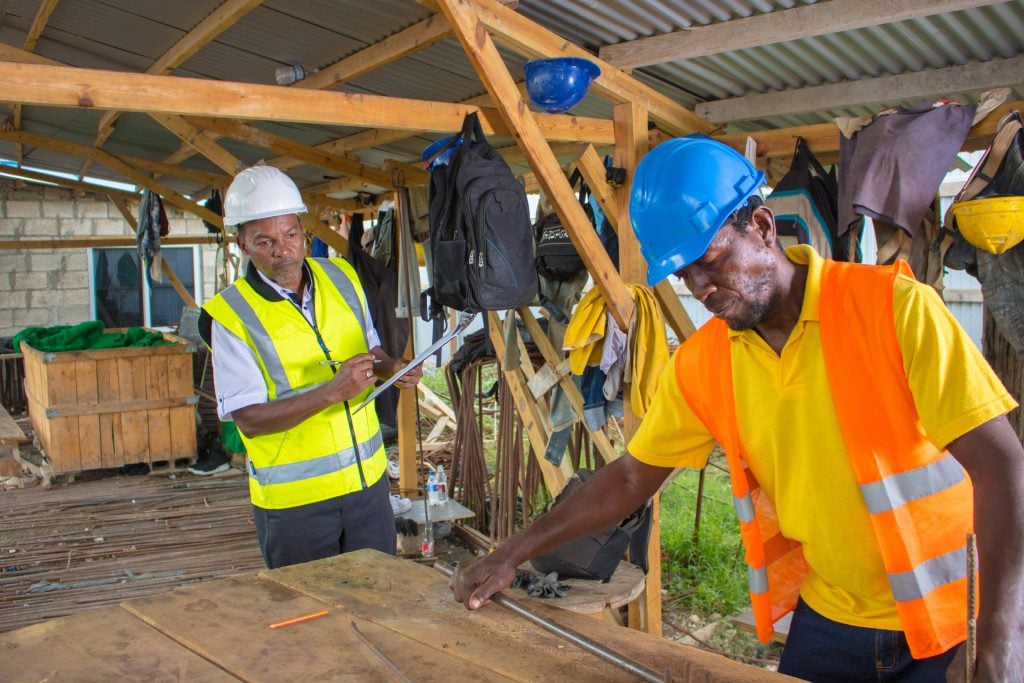
The need to increase Jamaica’s productivity was a common refrain in Prime Minister Dr. Andrew Holness’s budget presentation last week. He revealed that the government is “developing a policy position on how to improve our low level of productivity,” and that this will be presented in greater detail at a later date. Presumably, this is the same policy the government said in November 2019 it was developing through the Ministry of Labour and Social Security’s Jamaica Productivity Center (JPC), but for which no public update had been provided until now.
The government could be forgiven for relegating its development down the pecking order of priorities, given that the idea was first introduced months before the onset of the COVID-19 pandemic. However, with a definitive shift in gears—particularly after the dislocation caused by Hurricane Melissa—the drive toward more sustained and robust economic growth would naturally be consistent with, and facilitated by, the completion of the policy.
Jamaica’s productivity woes have been well documented. Both labour productivity and total factor productivity have declined steadily for decades, with the latter estimated to have diminished by an average of 1 per cent annually over the last 40 years, and the former likely by even more. Much analysis has been undertaken, but without a clear solution. The result has been a continuation of the anaemic growth that has characterized Jamaica’s economy for the past half-century—this time occurring, paradoxically, within the context of an expanding labour force. More people are working, but each additional unit of labour is producing relatively less output.

It is this situation that the government’s ASPIRE programme, announced 18 months ago, has committed to addressing through six critical pillars, pivoting toward economic growth after more than a decade of entrenching macroeconomic stability. The Prime Minister also noted that public sector wage increases will need to be tied to productivity rather than solely to inflation. A clearly articulated National Productivity Policy would seamlessly harmonize and streamline these considerations into a single overarching framework.
When the policy was first publicly broached, the government indicated that its development would be premised on “human capital, government policies and programmes, the upgrading and retrofitting of our places of work, and a safe working environment.” In other words, having recognized the systemic and deeply structural nature of the problem, the government appears committed to a more holistic and analytical approach to solving it—rather than relying on the frequent misdiagnosis that attributes suboptimal growth outcomes primarily to inherent laziness across the workforce. The Prime Minister reiterated this point in his budget presentation, noting that Jamaica’s relatively low level of productivity “is not a judgement on Jamaican workers. It is a diagnosis of our economic structure.”
This realization must now be coupled with a concerted effort to significantly improve the country’s levels of education, training, and remedial upskilling. Currently, only four in ten members of the employed labour force are adequately certified for the work they perform, and fewer than half of those individuals hold tertiary-level qualifications. That employment profile militates directly against higher value-added economic activity, whether developed indigenously or attracted through increased foreign direct investment (FDI). Enhanced output becomes difficult, and higher remuneration nearly impossible. The prospects for improving quality of life and living standards are diminished. In aggregate, the country stagnates.
To attract the development of new and better-paying industries—and in keeping with the thrust toward economic diversification—there are natural synergies among the Ministry of Labour and Social Security (MLSS), where the Jamaica Productivity Center (JPC) resides; the Ministry of Education, which now includes skills training; and the newly created Ministry of Efficiency, Innovation and Digital Transformation. These three key ministries should seek to devise an all-of-government approach that effectively harnesses the resources and talent across the entities likely to be involved in embedding a culture of productivity, beginning with the public sector.
Jamaica’s consistent attainment of record-low unemployment represents a unique inflection point—one where the pivot to growth must be accompanied by a transformation in the nature of employment. This imperative is further underscored by labour force data indicating a significant number of persons outside the workforce. Some have returned to school or are engaged in unpaid care work at home, while many have stopped seeking employment due to discouragement. Others have rejected available jobs because of what they perceive to be inadequate compensation.
Consequently, Jamaica is currently experiencing what is statistically referred to as “full employment.” With nearly everyone who is actively seeking work and possesses the skills demanded by the market already employed, labour shortages have emerged in some sectors. These shortages are compounded by employers’ persistent complaints about the difficulty of filling vacancies due to a shortage of appropriately skilled workers. Those who are between jobs are classified as “frictionally unemployed,” reflecting a tight labour market with limited room for manoeuvre.
There remains a sizeable pool of potential labour, with roughly half as many persons outside the workforce as there are within it. Jamaica’s labour force participation rate, at 67 per cent, is broadly in line with that of developed countries. Nevertheless, the country’s unique development context and ambitions for economic expansion require higher levels of participation—an outcome that is unlikely in the short term. The focus, therefore, must be on creating the enabling conditions for those currently employed or available for work to increase their productivity. That process should begin with the National Productivity Policy.
Keenan Falconer is an economist with experience across Jamaica’s public and private sectors, as well as the multilateral financing space. Send feedback to keenanjfalconer20@gmail.com.
 English (US) ·