
 4 months ago
45
4 months ago
45
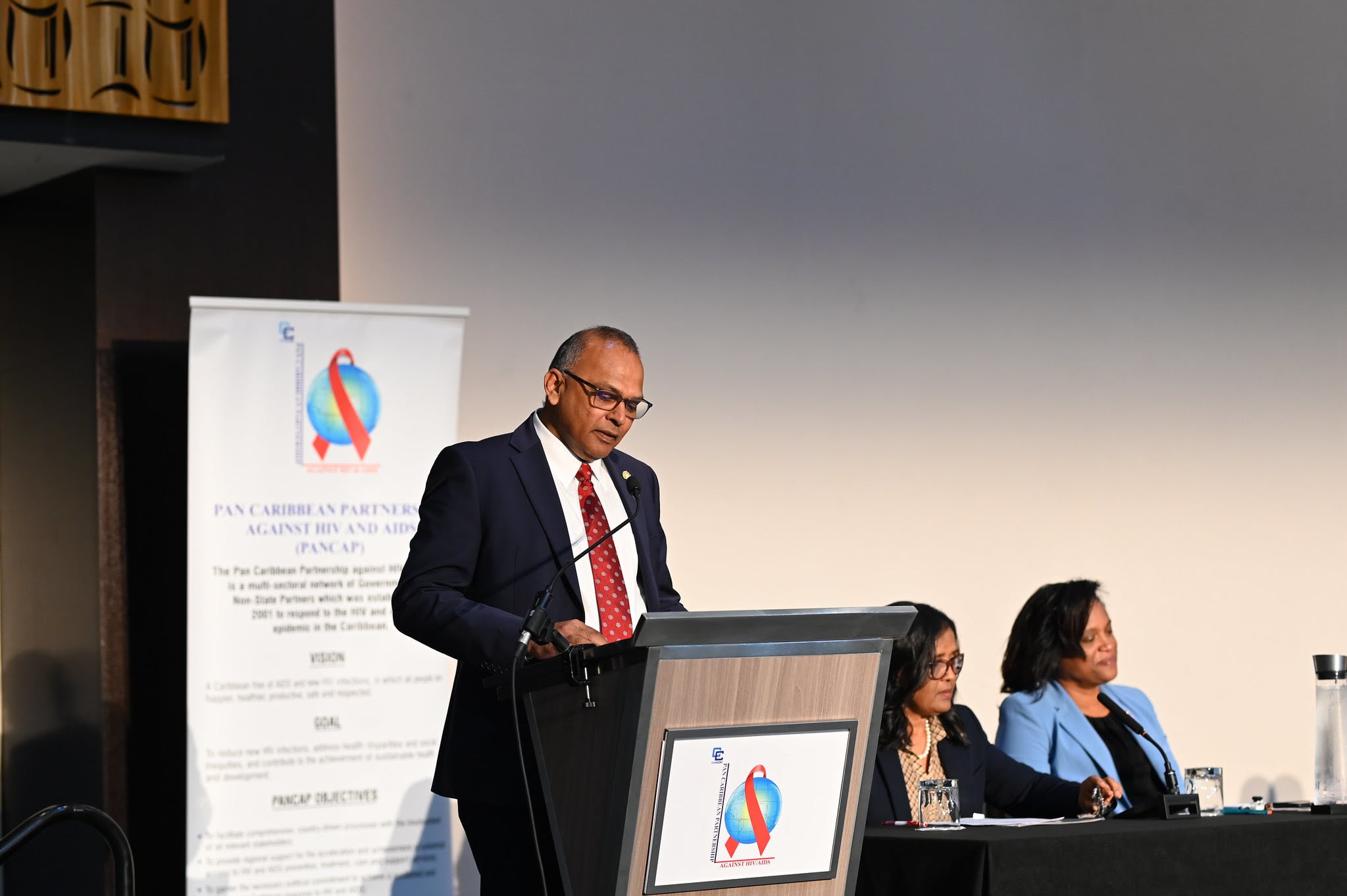
The Caribbean HIV response is at a critical juncture, with new infections remaining unacceptably high and funding pressures growing, CARICOM officials warned this week.
Honourable Dr. Frank Anthony, Minister of Health of Guyana, Chair of the CARICOM Council for Human and Social Development (COHSOD)—Health, and Chair of the PANCAP Executive Board, highlighted these concerns during the Opening Ceremony of the Tenth Meeting of National AIDS Programme Managers and Key Partners, held in Trinidad and Tobago on March 18 in a hybrid format.
“New HIV infections in the Caribbean remain stubbornly high, with approximately 15,000 new cases each year—one in four among young people aged 15 to 24,” Dr. Anthony said. He underscored the need to accelerate prevention, expand access to innovative treatments, and ensure equitable access to new technologies.

Among promising advances, he cited long-acting injectable medicines, including lenacapavir, which could offer twice-yearly protection at affordable costs. “Equitable access to these technologies is essential if the Caribbean is to change the trajectory of the epidemic,” he said.
Dr. Anthony also warned of declining international support for prevention programs, stressing that reduced funding could result in setbacks across the region. “The global HIV response is entering a difficult moment. Funding pressures are growing. Some international support is declining. Prevention programmes are often the first to feel the impact. In fact, UNAIDS warns that if prevention services decline significantly, the world could see nearly four million additional HIV infections over the next five years,” he said.
The Minister urged stronger regional cooperation to negotiate better access to medicines, secure sustainable funding, and ensure no Caribbean nation is left behind. He called on stakeholders to embrace innovation, place people—especially the most vulnerable—at the center of the response, and continue the fight to end AIDS. “History will judge the Region not by its meetings or reports, but by whether it finishes the work,” Dr. Anthony said.
Dr. Anthony also highlighted the Caribbean’s progress in combating HIV. According to UNAIDS data, AIDS-related deaths have declined by more than 60% since 2010—the steepest reduction of any region globally—reflecting sustained investment in treatment and collective regional commitment.
“This progress did not happen by accident. It happened because governments invested in treatment. It happened because of our collective work to provide dignity and care… it shows us something important: that when the Caribbean commits to a challenge, it can deliver results,” he said.
He paid tribute to doctors, nurses, programme managers, and public health professionals who have dedicated decades to confronting HIV and AIDS in the Caribbean. “Many of you have been on the frontlines of this fight for decades. You stood with patients when treatments were scarce. You challenged stigma when silence surrounded this disease. You built the programmes and health systems that today save lives across the Caribbean. Because of your work, thousands of Caribbean families today live with hope. And for that, we owe you our deepest gratitude,” Dr. Anthony concluded.
 English (US) ·