
 4 months ago
47
4 months ago
47
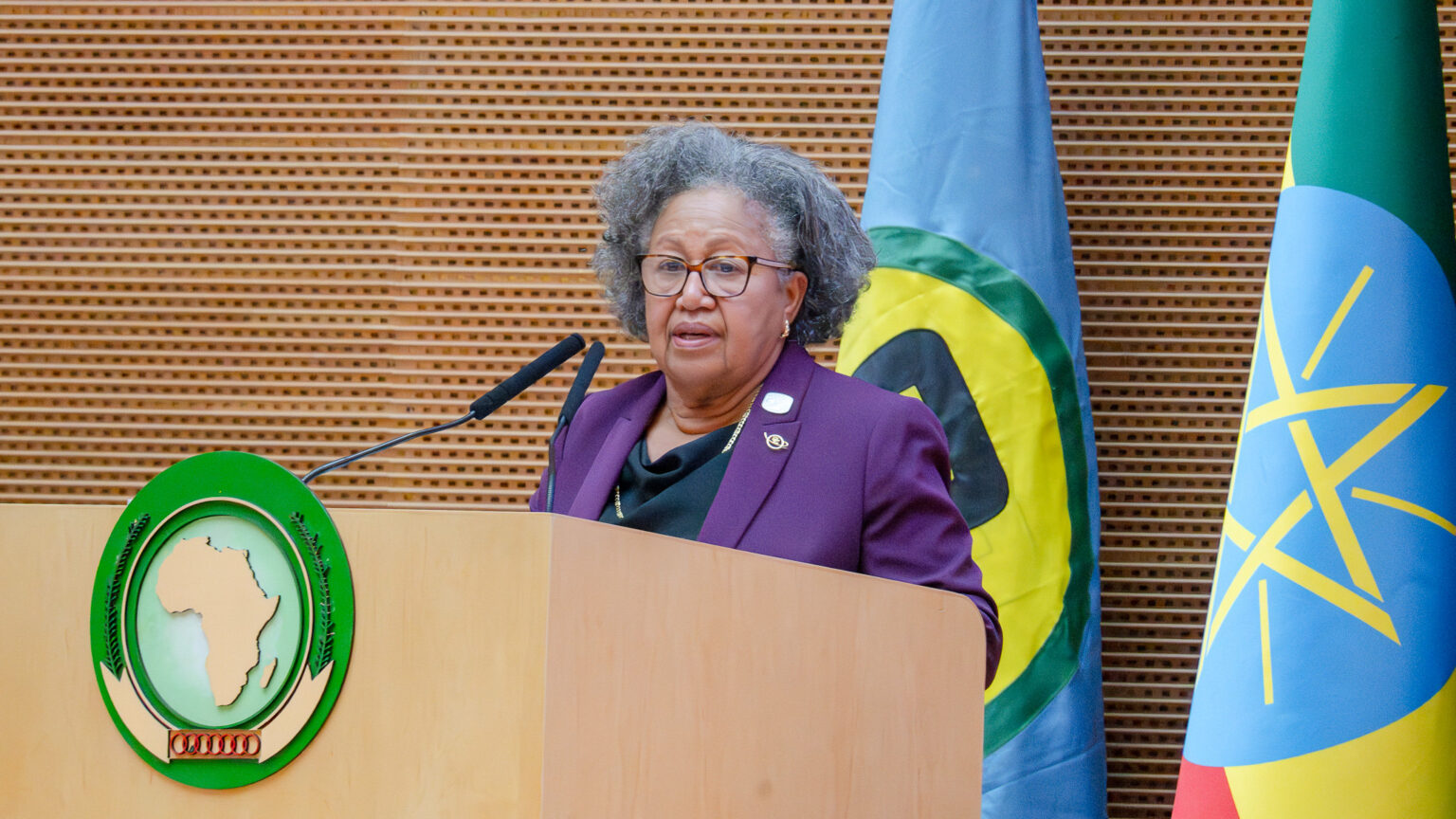
Secretary-General of the Caribbean Community (CARICOM), Carla Barnett, is urging a coordinated global approach to reparatory justice, stressing that the issue must be tied directly to development outcomes rather than framed as charity.
Barnett made the call while participating in the First CELAC–Africa High-Level Forum held on March 19 in Bogotá, where she joined a panel discussion titled “Forum on Historical Reparations: Perspectives from Africa, Latin America and the Caribbean.”
“It must therefore be seen as justice plus development. It must not be seen as charity,” she said, underscoring the need to link reparations to tangible socioeconomic progress.

The CARICOM Secretary-General pointed to the United Nations’ International Decade for People of African Descent as a critical platform for advancing global action on socioeconomic justice and the recognition of the rights of people affected by the legacy of colonialism.
She also referenced the African Union–CARICOM Summit, noting that leaders had committed to strengthening collaboration between Africa and the Caribbean on reparatory justice. According to Barnett, that partnership remains central to advancing the issue on the global stage.
Describing the CELAC–Africa engagement as a significant step forward, she highlighted ongoing efforts by CARICOM Member States to co-sponsor resolutions on reparations at the United Nations.
Barnett said the regional bloc also intends to work alongside partners in Africa and Latin America to advocate for the establishment of a High-Level Political Forum on Reparations, aimed at deepening international dialogue and accelerating action.
The forum brought together stakeholders from across Africa, Latin America and the Caribbean, reflecting growing momentum behind calls for reparatory justice and increased cooperation among regions with shared historical experiences.
 English (US) ·